MG ZS EV: no-start fault traced to a failed DC-DC converter
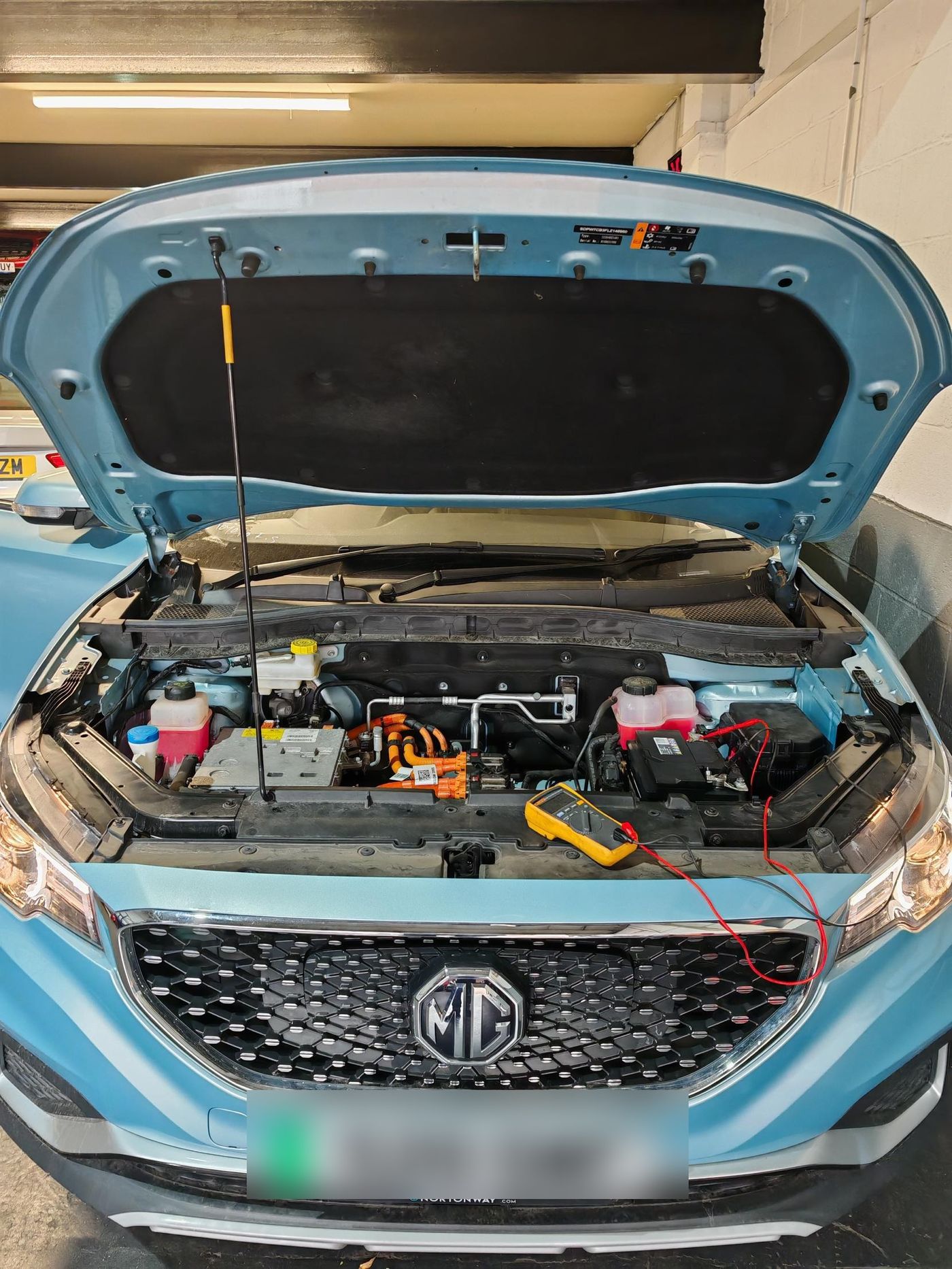
The MG ZS EV in the workshop with the bonnet up and a multimeter connected for diagnostics.
The problem
The customer's MG ZS EV wouldn't start — no power at all.
A no-start on an EV can point to several places: the 12V auxiliary battery, the main high-voltage pack, or the system that links the two. Working out which one it is takes proper diagnosis, not guesswork.
Why a no-start isn't always the 12V battery
Every EV still runs a conventional 12V system alongside its high-voltage battery — it's what powers the locks, lights, infotainment, and crucially, the contactors that connect the main battery to the rest of the car. If the 12V side is flat, the car can look completely dead even though the main battery is perfectly healthy.
The 12V battery itself isn't charged by an alternator like a petrol car. Instead, a DC-DC converter steps the high-voltage pack's output down to 12V to keep that smaller battery topped up. When the converter fails, the 12V battery slowly drains with nothing replacing the charge — and eventually the car won't wake up at all.
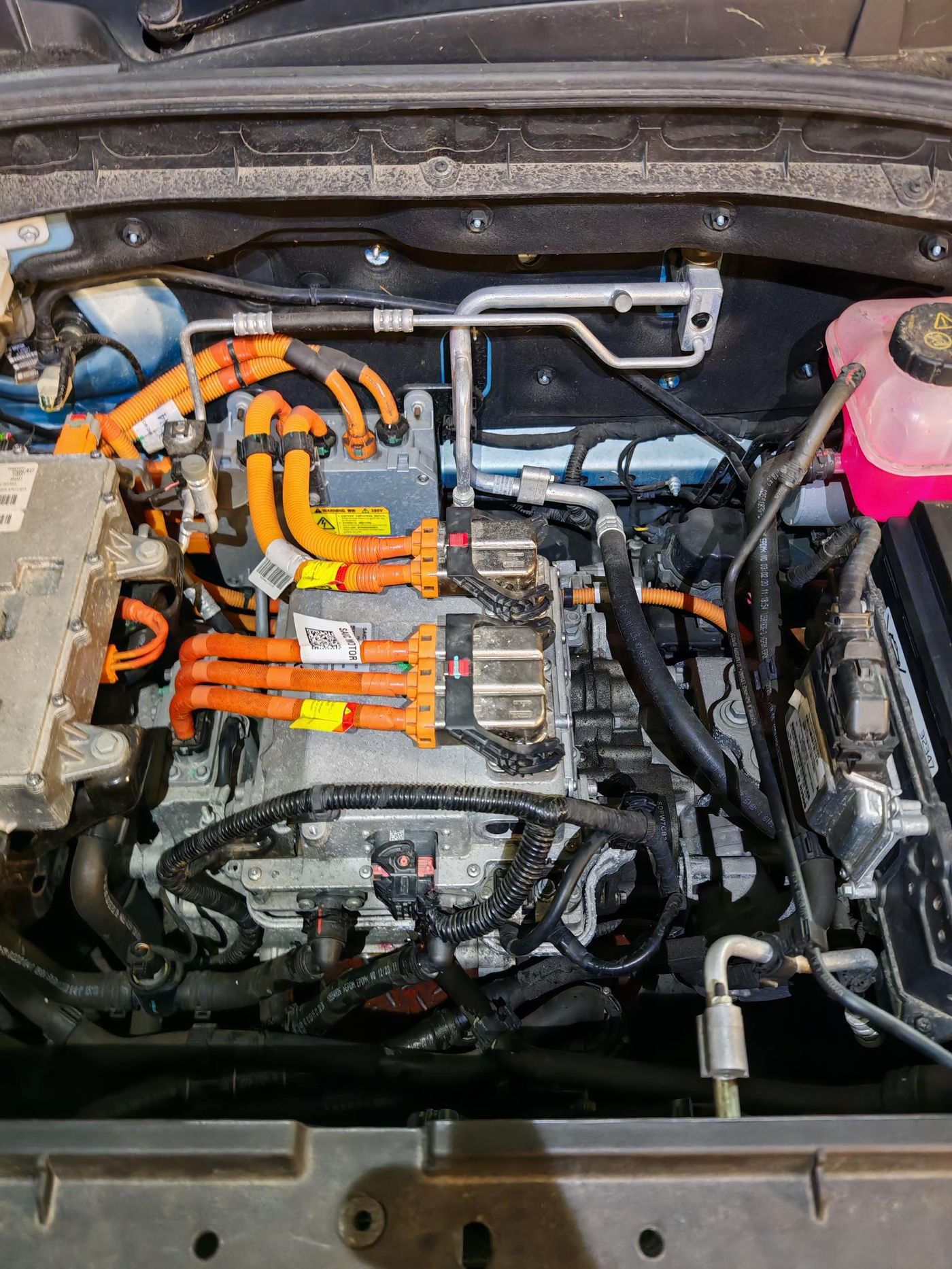
The DC-DC converter in place in the engine bay, with its high-voltage connectors visible.
Diagnosis
Diagnosis traced the no-start to the DC-DC converter. The unit was taken out of the car so it could be looked at properly on the bench.
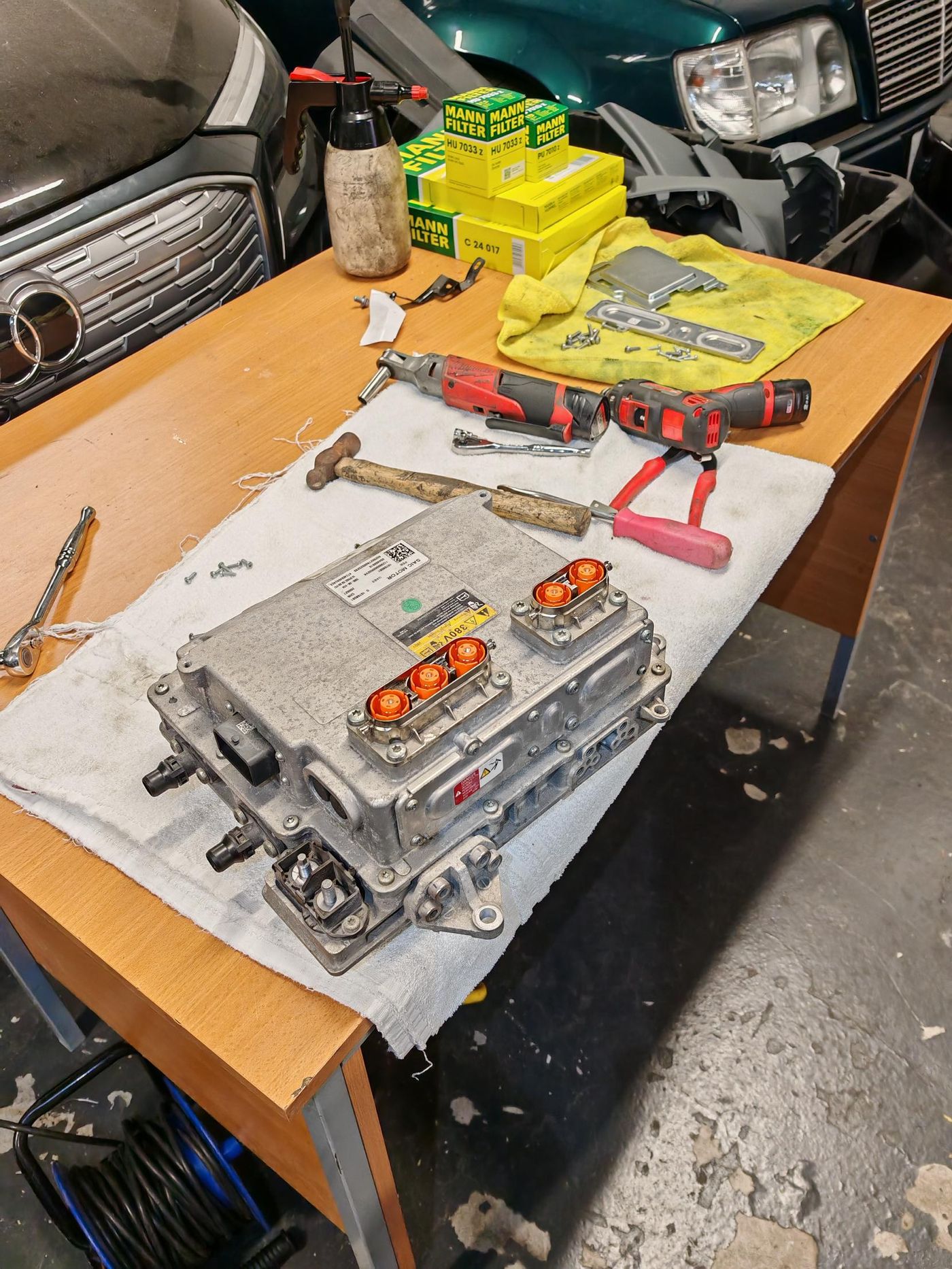
The converter once it was out of the car.
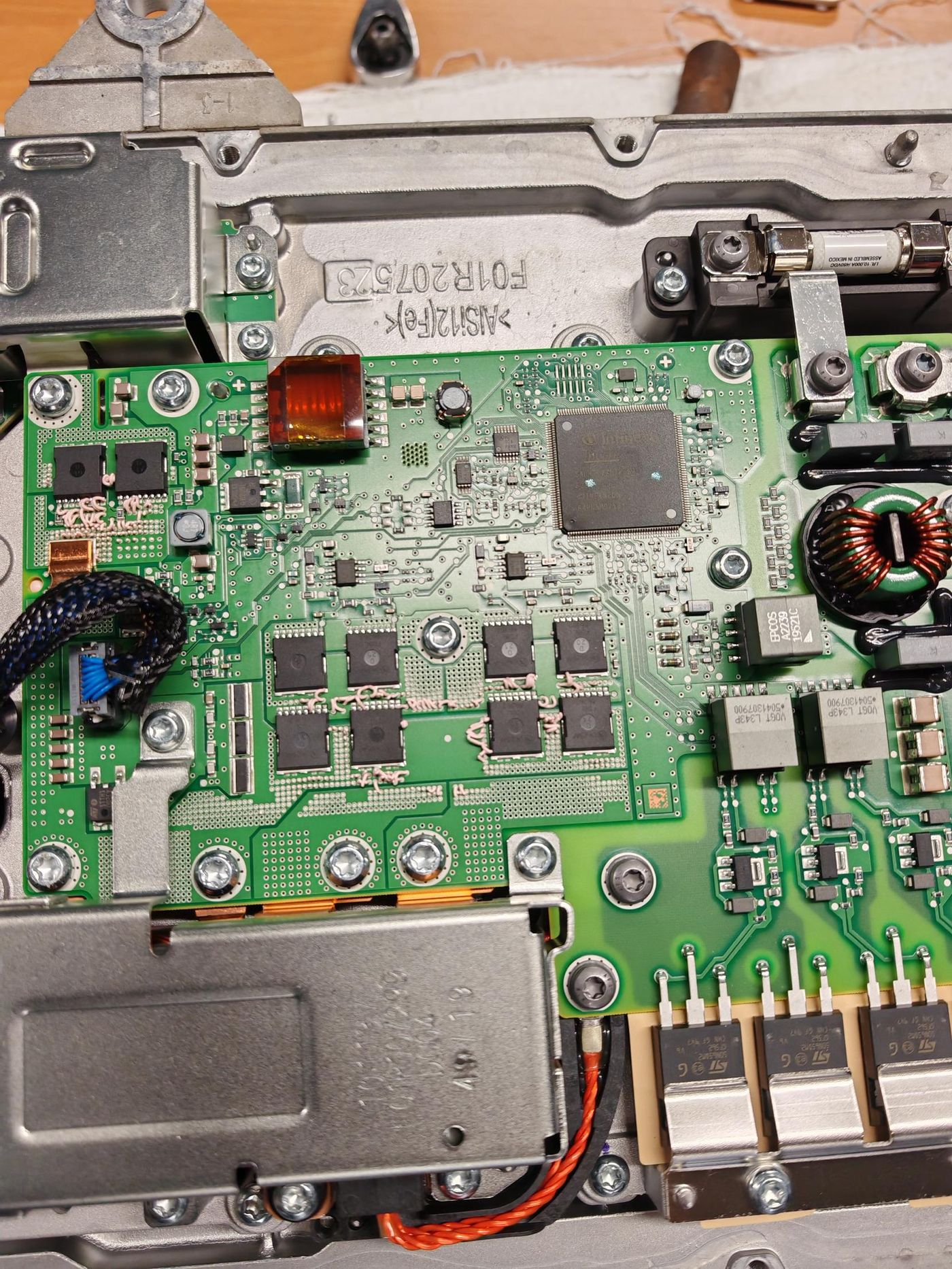
Inside the converter — this is the board that steps the high-voltage supply down to 12V.
The fix
The faulty DC-DC converter was replaced.
Outcome
Fault diagnosed and fixed with a replacement DC-DC converter.
Why this matters
A no-start on an EV gets misread as "the battery's dead" more often than not — and a jump start or a new 12V battery alone won't fix it if the converter feeding that battery has failed. It's the kind of fault that needs proper HV-rated diagnostic equipment and the training to use it safely, rather than guesswork.
Dealing with a similar fault?
If your EV or hybrid won't start, or the 12V system keeps draining, we can get to the bottom of it.
Request a Quote Call 07860 541925